Hair and nails: what actually helps
Not the shampoo and not the miracle oil. Food, sleep, calm and a lot of patience — because hair grows about a centimeter a month.
By Liran Dandekar · November 8, 2026 · 4 min read
The question I didn't expect
As a coach, I expected questions about running, knees and protein. I didn't expect parents at the side of the pitch to ask me about hair. But they do — usually after a hard few months, holding a phone full of ads for oils, serums and gummies.
My answer is always the same, and it's less exciting than the ads: hair and nails are built from the inside, slowly, from what you eat and how you live. I'm a coach, not a doctor or a dermatologist. If you notice sudden or heavy shedding, bald patches, or nails that change shape or color, see a doctor first — that's not a lifestyle question.
For everyone else, here's what actually matters.
Start with patience
Hair grows about one centimeter a month. Nails grow even slower — a fingernail takes around four to six months to grow out completely. That means anything you change today reaches the root within weeks, and shows in the length only after months.
This is why most "it didn't work" stories are really "I stopped after three weeks" stories.
Hair keeps a diary. What you do today, it will show you in three months.
What hair and nails are made of
Hair and nails are mostly keratin — a protein. So the first question isn't which vitamin, it's whether there's enough protein on your plate across the day. Eggs, fish, chicken, legumes, cottage, yogurt, tahini.
Then come the nutrients with a clear, recognized role:
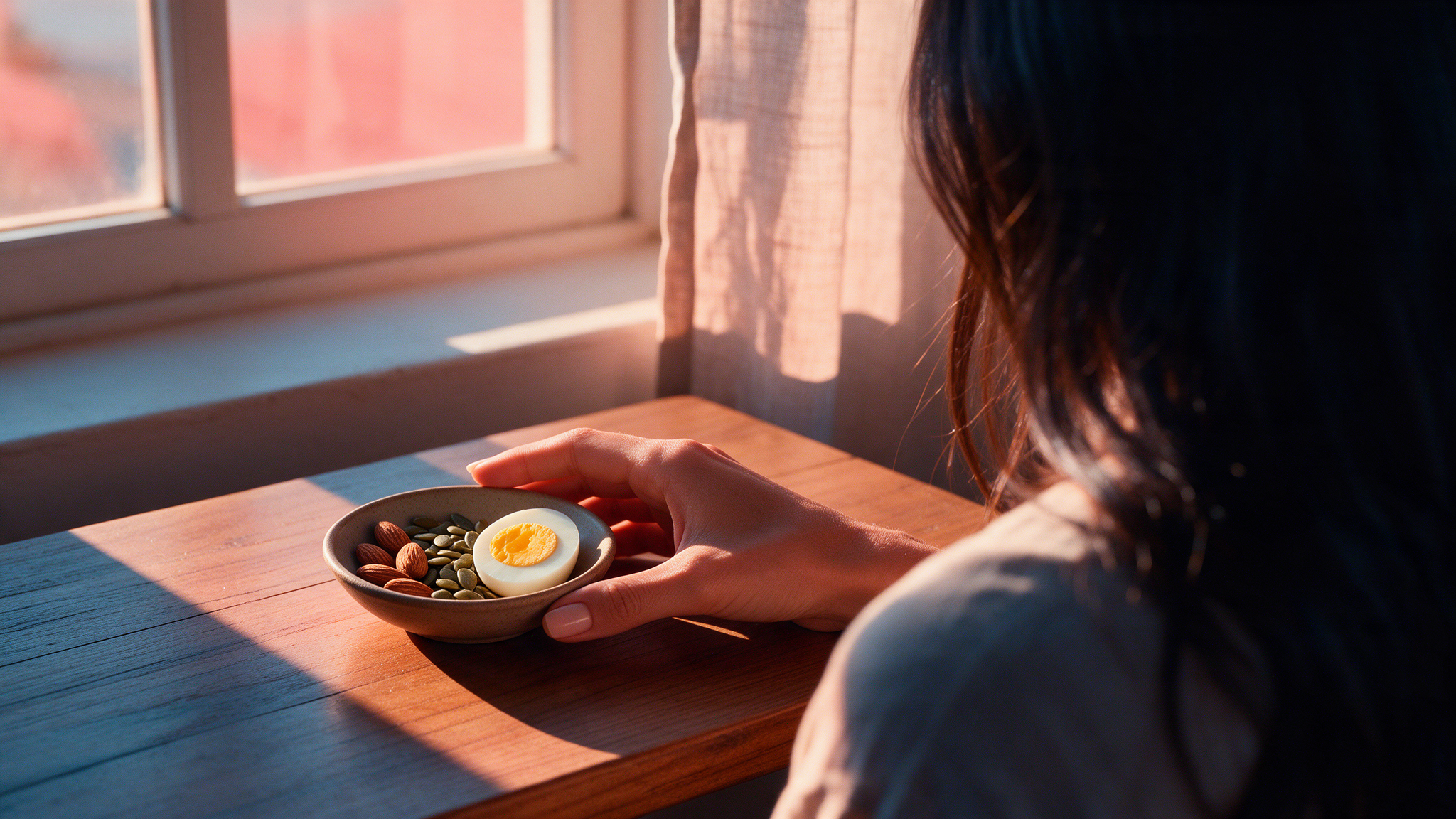
- Zinc contributes to the maintenance of normal hair and normal nails. Found in meat, pumpkin seeds, chickpeas, lentils and whole grains.
- Biotin contributes to the maintenance of normal hair. Found in eggs, nuts, seeds and legumes.
- Selenium contributes to the maintenance of normal hair and nails. A few Brazil nuts, fish and eggs are good sources.
- Iron contributes to normal oxygen transport in the body. Red meat, lentils, chickpeas and leafy greens — eaten with vitamin C (lemon, peppers, tomato), since vitamin C increases iron absorption.
An Israeli plate covers most of this without trying: hummus with an egg, lentil soup, a salad with lemon and pumpkin seeds, fish on Friday.
Sleep and stress are not soft topics
Hair follicles are among the busiest cells in the body, and they don't love chaos. Many people notice more hair in the brush two or three months after a stressful period — a move, a hard season at work, a big event. By the time they see it, the stress is already behind them, so they never connect the two.
What helps here isn't a product. It's the boring basics: seven hours of sleep, regular meals instead of skipping and then overeating, and something that brings the body down at the end of the day — a walk, a shower, a phone left outside the bedroom.
Treat them gently
Some of what wears down hair and nails comes from outside:
- Very hot water and hot styling tools every day.
- Tight ponytails in exactly the same spot.
- Using nails as tools — opening cans, scraping off labels.
- Dish soap without gloves.
None of these is dramatic. Together, every day, they add up.
What I see in athletes
In teenagers who train a lot, the first thing that suffers when food isn't enough isn't the muscles — it's energy, and then nails and hair. A body working hard shares out its resources by priority, and hair and nails are at the back of the queue. That's not a reason to worry, it's information: if you're training more, eating less or sleeping less, don't expect your hair to be the first thing that looks great. Take care of the basics, and it arrives last — but it arrives. I tell parents the same: before buying another shampoo, look at what your kid eats in the morning and at lunch.
Where a supplement fits
Food comes first. If you want to add something, choose it for nutrients with a real role, not for promises. For me it's a B-Yng sachet in water in the evening, as part of a quiet end-of-day routine — after the plate, after the sleep, never instead of them.
This week
Two small things for seven days:
- Protein at every meal, including breakfast.
- One handful of seeds or nuts a day — pumpkin seeds, almonds, or two Brazil nuts.
Take a photo of your nails today. Set a reminder in your phone for three months from now and take another one. Patience is part of the routine.
A food supplement is not a substitute for a varied, balanced diet. Pregnant or nursing women, children and people on medication should consult a doctor.